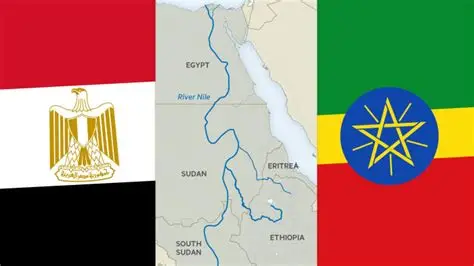



written by: Omar Ala'meri
The geostrategic outlook for 2026 regarding the Nile Basin countries, the Horn of Africa countries, and the Red Sea remains more likely to see an escalation of conflict than bilateral or collective cooperation.
Given the entanglement of interests between the international and regional actors of the countries of southern and northeastern Africa , and with reference to the current reality, it does not bode well for achieving long-term stability and collective cooperation among the countries of this region.
Indeed, the interests of the relevant international powers are almost drawing a map of new formations witnessed by the Nile Basin countries and the countries of the Horn of Africa with regard to the hot issues surrounding the axis of conflict for the Nile water countries and the strategy of influence in the navigation of the Red Sea.
Therefore, Ethiopia is the main and most powerful actor in the geostrategic arena of conflict in the equations of the region’s hot issues.
Ethiopia and its central role among the countries of Southeast Africa:

The indicators of a country’s weight depend on natural indicators such as the size of its diverse human resources, as well as its natural resources, the size of its geographical area, and its possession of sea outlets, and indicators of political and economic development such as the size of its presence on the international and global political stage, in addition to the development in the use of technology in the national production process and in the development of infrastructure.
Thus, Ethiopia possesses some natural advantages such as its vast area, large population, and fertile agricultural land with numerous rivers. However, it lacks others, such as a sea outlet, as it has been a landlocked country since the 1970s when Eritrea declared its independence. While it enjoys a strong international presence as a diplomatically influential nation and is witnessing significant infrastructure development, it lacks certain prerequisites for further progress. These include energy self-sufficiency given its large size and population, insufficient industrial development, and a diverse ethnic, religious, and cultural makeup.
Its demographic composition, shaped by its historical depth, makes the beginnings of internal stability almost impossible.
Accordingly, Ethiopia represents a key and pivotal player between the Nile Basin countries on one hand, and the countries of the Horn of Africa and the Red Sea on the other.
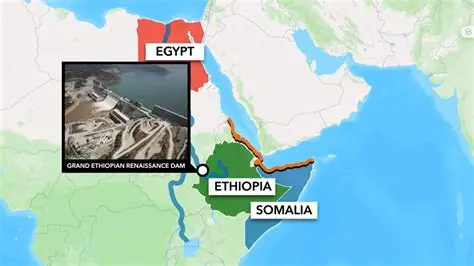
It constantly seeks to address its geostrategic deficiencies by finding a sea outlet overlooking the Red Sea, and by controlling and benefiting as much as possible from the routes and some sources of the Nile River, as it invests in the Renaissance Dam project in energy and agricultural fields.
In addition to its political aspirations regionally and internationally through control and influence, like other ambitious countries, even if it is at the expense of its neighbors.
The above results in an overlap of numerous reasons and factors that raise the question : Is Ethiopia the center of the crisis in the Horn of Africa and the Nile Basin countries?
The intertwining of lines between the strategies of states in the Horn of Africa:
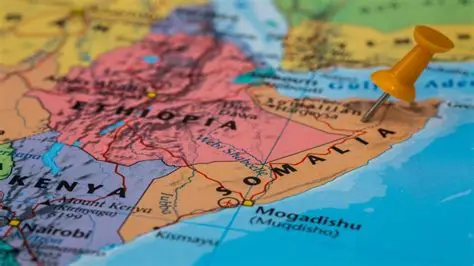
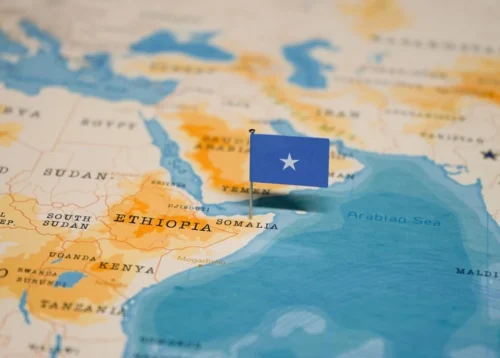
In its relentless pursuit of a sea outlet and to overcome its inferiority complex of leasing ports from neighboring countries like Djibouti, Ethiopia exploited the decades-long internal crisis between southern Somalia and the Somali government. Ethiopia initiated understandings with the Somaliland region to lease a sea outlet overlooking the Gulf of Aden, in exchange for Ethiopian recognition of Somaliland’s sovereignty. This prompted the Somali government in Mogadishu to seek regional and international allies to protect its sovereignty and confront the interventionist forces of countries with vested interests, such as Ethiopia and the Israeli entity. From here, the scope of the geopolitical and military conflict began to widen with Egypt’s entry through bilateral cooperation with the Mogadishu government, and Somalia as a whole became fertile ground for settling scores between Egypt and Ethiopia, which include the Grand Ethiopian Renaissance Dam and the Nile waters.
As a result, both Ethiopia and Egypt began a geostrategic race to form fierce alliances with the countries of the Horn of Africa and the Nile Basin countries, each from its own side, in order to undermine and weaken the other.
Alliances have extended internationally even beyond the geography of Africa, and the political trends of Southeast African countries have become susceptible to influence and being influenced by the policies of the world’s countries, especially the allies of the East and the allies of the West.
Red Sea and Nile Basin policies:
While an understanding between Egypt and Ethiopia regarding the Renaissance Dam was not possible, Egypt began to exert diligent diplomatic efforts under what it called the Egyptian vision based on the three pillars of “security, stability and development” (1). It established the tripartite cooperation mechanism between it, Somalia and Eritrea regarding the situations in Sudan and the Red Sea, and areas of restoring consensus and dialogue between the Nile Basin countries, with numerous meetings for cooperation and coordination of the Ministerial Council of the Nile Basin Initiative, the last of which was the thirty-third meeting held in Burundi on December 6, 2025.
Egypt’s approach has manifested itself through its tripartite vision, through its official discourse calling for initiatives to resolve conflicts, in addition to political and diplomatic activity , as Egypt, represented by its President Sisi, has made various visits to the countries of the Nile Basin and the Horn of Africa to consolidate relations and gain alliances, and diplomatic visits by African heads of state to Cairo at different times, such as the visits of the Somali President, the Djiboutian President, and the Eritrean President.
This has resulted in clear strategic alignments between Egypt and countries such as Somalia, Eritrea, and Djibouti to promote stability in Somalia and the Red Sea.
In contrast, the frameworks of alliances witnessed Ethiopian efforts to consolidate its relations with several countries such as Kenya, Uganda, Congo and South Sudan, and this was evident in many areas, most notably the field of electricity and energy, military cooperation, manufacturing, tourism, media and education, economic exchange, developing airlines and expanding aviation services.
Given this geostrategic competition between Egypt and Ethiopia in the region, it indicates that relations between the countries do not seek collective cooperation but only bilateral cooperation, so that bipolar alliances are formed with regard to the policies of the Red Sea and the Nile Basin countries.
Does 2026 Foretell War?

Given the external interventions in Somali affairs, it appears that the level of disagreements among the active parties has increased, with the growing disputes between Mogadishu, the central government, and some regions, which became clearly evident after the issue of completing the Somali federal constitution was raised and some amendments were proposed.
Tensions reached their peak when Egyptian forces landed in Mogadishu, as some regional leaders expressed discomfort with the presence of Egyptian forces. In fact, the president of the southwestern region publicly expressed his rejection of the presence of Egyptian forces while supporting the continued presence of Ethiopian forces.
Turkey had previously sought to end the Somali-Ethiopian dispute, with the parties expressing optimism about progress towards bridging the differences, but Egypt’s military intervention has put the region in a state of unprecedented tension and mobilization.
Between Abiy Ahmed’s stubbornness to the point of taking risks to achieve his goals, Egypt’s military entry into Somalia, and its deployment on the borders of Ethiopia, forward-looking studies predict that confrontations in the region are likely, which some have described as “ the war that no one is talking about.”
Basin region confirms the lack of collective cooperation, and there is a deep entanglement between the vital strategic areas and supreme interests of many competing regional and international powers, not to mention the severe conflicts that many countries in the region are experiencing, whether between one country and another or within a single country, which are represented in ethnic conflicts, conflicts over resources, or the intervention of external parties.
There is an escalating and competitive pattern that imposes itself on many issues, which makes the probability of addressing them zero, and limits the possibility of a settlement between the parties, and even if a settlement and truce are reached, it will undoubtedly collapse again.