


Edit by: " HAPC" Team
The UAE’s interest in space projects was not based on dreams alone to jump from zero, but it began by focusing on its infrastructure to create a suitable environment to attract researchers and host initial scientific experiments within the country, where the first successful experiments in the field of biological development were recorded as “ hybridization ” experiments between living organisms.
In the industrial and technological field, in addition to its transformation into an important center of the global economy; and when it found itself that it was not lacks something that advanced global countries possess, it has taken its pivotal step to direct ambitions towards space exploration.
The UAE’s actual interest in space exploration dates back to the era of Sheikh Zayed bin Sultan Al Nahyan, may God have mercy on him , in the 1970s, when he met with a team from the American space agency “NASA” responsible for the “Apollo” mission to the moon. Since that meeting , the UAE has been motivated to develop its interest in the field of space as a dream, and that dream was embodied in 1997 with the establishment of Thuraya Telecommunications Company, and ten years later it established the “ Yahsat ” space company.
The UAE’s Prominent Space Achievements:
The beginning for the United Arab Emirates was the establishment of Thuraya Telecommunications Company as the first practical step in 1997 AD , followed by the establishment of the Emirates Institution for Advanced Science and Technology ( EIAST ). 2006.
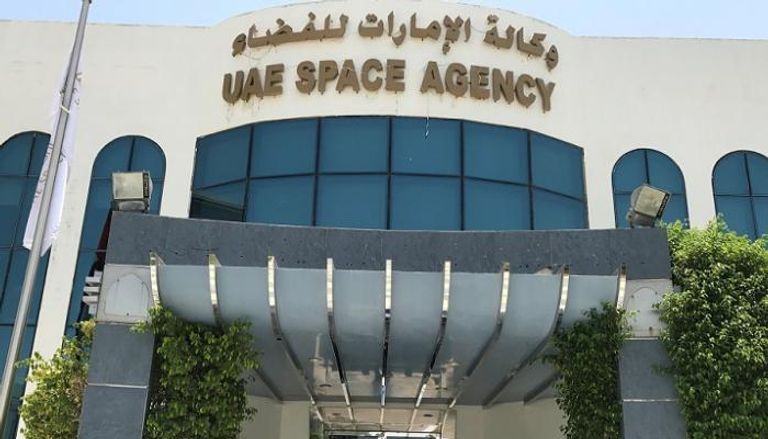
By 2009 , it had actually launched the DubaiSat 1 satellite as its first satellite, and then in 2013 it launched the DubaiSat 2 satellite . This was followed by its pivotal step of officially establishing the UAE Space Agency in 2014 .
The United Arab Emirates announced its participation in the project to develop and build a lunar space station. ( Gateway ) in 2015, along with the United States, Japan, Canada, and the European Union. (1)
In 2018, it launched “KhalifaSat,” the first satellite developed entirely by Emirati hands , and the following year it sent the first Emirati astronaut (Hazzaa Al Mansouri) to the International Space Station.
By 2021-2022, it announced the successful launch and arrival of the “Hope Probe” into Mars orbit , stating at the time , Dr. Ahmed Belhoul Al Falasi , Chairman of the Board of Directors of the UAE Space Agency, stated that the UAE has already witnessed the probe’s entry into Mars orbit in 2021, and that significant progress has been made in the outputs of scientific research, and the national space system has expanded with the increasing number of entities working in the sector. Space to triple , with remarkable progress in research and development.
goal of this mission was to explore the Martian atmosphere and its natural and climatic phenomena, in addition to research on Mars’ smaller moon, Deimos. Thus, all these exploratory efforts for Mars are aimed at obtaining accurate information about whether the planet Mars is habitable.
Alamal Probe:
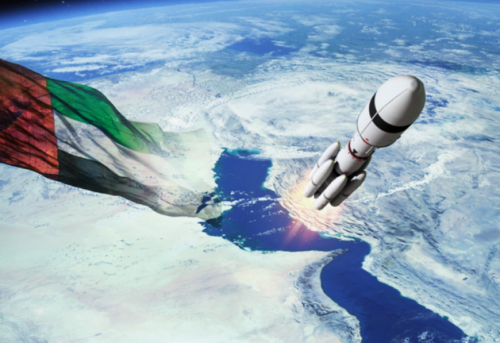
The Hope Probe is a spacecraft that is distinguished by the efficiency of its instruments such as the digital camera ( EXI ) for exploration, the infrared spectrometer ( EMIRS ), and the ultraviolet spectrometer ( EMUS ). It is also distinguished by its ability to collect extremely accurate data about the climatic phenomena of Mars, according to precise scientific evidence.
Engineer Mohsen Al Awadhi, Director of Space Missions at the UAE Space Agency, said that the Hope Probe has achieved a new scientific milestone, as its instruments turned away from Mars towards the sky, observing the passing comet I/ALTAS 3.
Task Future for Space Exploration :
The UAE Space Agency had previously announced its preparations for a space mission by 2025 , but in 2021 Dr. Ahmed Al Falasi, Chairman of the Board of Directors of the UAE Space Agency, stated that the agency had decided to postpone the mission to 2028. He emphasized that the decision to extend the mission to 2028 embodies the UAE’s commitment to enhancing and supporting the scientific impact of its space investments, its sense of responsibility as a partner in the international scientific research system, and its desire to harness space science to serve humanity. This is in addition to the technical and programmatic reasons, such as providing valuable scientific data and operational and field experience for current and future deep space missions, while continuing to provide important information about the atmosphere of Mars.
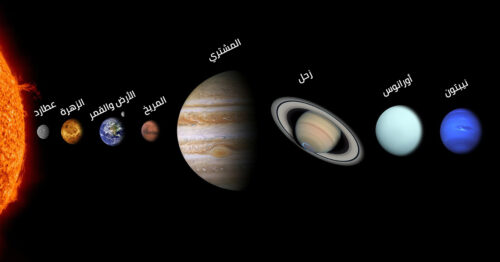
In this statement about postponing the space mission scheduled for 2025 to 2028, the objectives of the mission were revealed , as its goal included exploring Venus and the asteroid belt within the solar system between Mars and Jupiter. This mission requires building an Emirati spacecraft capable of traveling a distance of 3.6 billion kilometers in an estimated 5 Earth years to reach Venus, considering the landing on the last asteroid in 2033, due to its distance from Earth of 560 million kilometers. Thus, the mission to explore Venus and the asteroid belt will be the first Arab space exploration of its kind.
Mars City, UAE 2117:
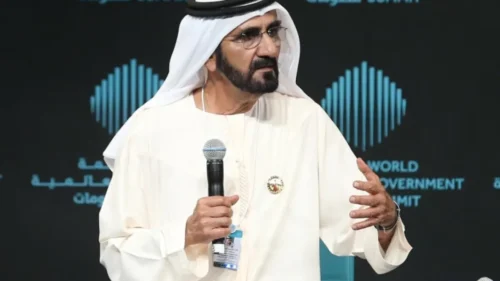
using virtual reality, His Highness Sheikh Mohammed bin Rashid Al Maktoum reviewed the Mars 2117 project video. This was through concepts based on topographical scientific data of Mars, where the scenes show an introductory tour that sheds light on ways to create a habitable environment for humans on the red planet, enhancing awareness of the future development of space.
The virtual video indicated that by 2050 to 2117, the UAE will have achieved its dream of building a residential city on Mars through the “Mars 2117 Project,” as in 2071 it will launch the UAE Centennial Vision 2071, forming a long – term government action plan to enhance the country’s reputation and soft power.
Conclusion:
It has become well-known and widely accepted since the late twentieth century until today that the United Arab Emirates is moving towards huge investments in applied research. In the world of digital technology and the world of silicon, the UAE has been able for decades to become an important global center for scientific research, such as biological research in hybridization experiments and others, and advanced industrial research in the production of electronics and digital devices. It has also recently achieved an important global center in artificial intelligence research and its applications on the ground to serve humanity in an organized and unlimited way, as it has become a major investment center, and with huge investment amounts, it has harnessed artificial intelligence in most areas of life, linking East and West with giant servers operating and generating the world of artificial intelligence in multiple areas of life.
Therefore, viewing the UAE as a purely technological country with global influence and an important position among scientifically advanced countries makes us believe in the realism of its ability to explore space. Talking about space missions launched by the UAE has become reasonable and realistic, and has even become easy and feasible for it, not a dream or ambition. Just as it has harnessed advanced global technological sciences and made them within its reach as a pivotal country in the Middle East, and has even become a controller and exporter of these sciences, it can also compete and advance in space sciences and achieve its future space projects with merit .