


Edited by:'HAPC' Team
ADDIS ABABA — In a critical move reflecting the fragile political and ethnic landscape in northern Ethiopia, the National Election Board of Ethiopia (NEBE) has issued a decisive ruling regarding the electoral process in the fiercely contested territories between the Amhara and Tigray regional states. As preparations for the 7th General Election get underway, this calculated measure aims to navigate one of the country’s most explosive flashpoints without triggering renewed conflict.
The Electoral Decision: A Breakdown of the Official Directive:
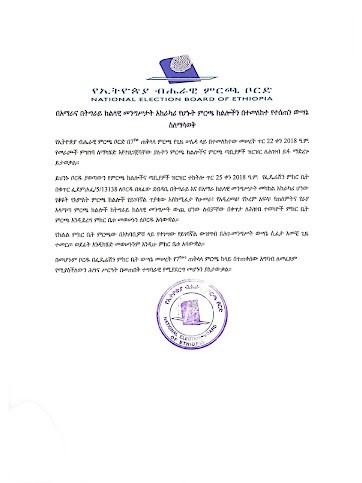
According to a recently released official document, NEBE’s decision is based on formal directives from the House of Federation (the upper house of the Ethiopian parliament), dated January 2026 (Tir 25, 2018, according to the Ethiopian calendar).
The Board has established an exceptional mechanism for five specific constituencies whose administrative identity remains a subject of deep political crisis: Humera, Welkait Tegede, Korem Alamata, Tselemti, and Raya Azebo.
The ruling outlines two distinct pathways for the upcoming elections in these areas:
- Direct Federal Representation: Residents of these contested zones will vote directly to elect their representatives to the House of Peoples’ Representatives (the Federal Parliament). Crucially, the administration of these federal elections will be conducted separately and entirely outside the jurisdiction of the Tigray Regional State administration.
- Postponement of Regional Elections: Elections for the Regional Councils in these five constituencies have been officially postponed indefinitely. Voting for local governance will only take place after the constitutional identity and administrative ownership of these territories are legally and definitively resolved.
The Roots of the Amhara-Tigray Territorial Dispute
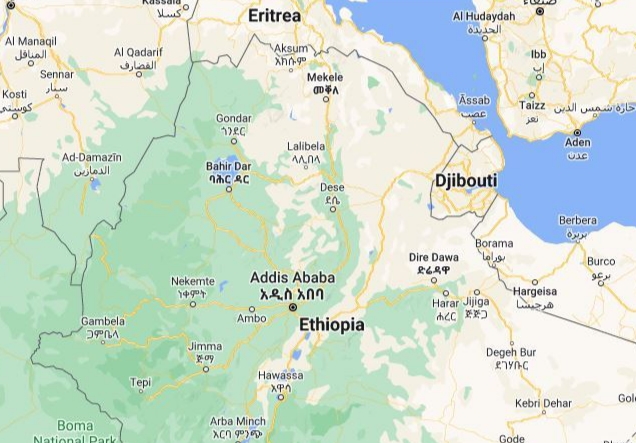
To understand the gravity of this electoral decision, it is essential to look at the historical and political roots of the conflict over these geostrategic lands, located primarily in what is officially mapped as Western and Southern Tigray:
- The 1991 Border Redrawing: The dispute violently surfaced in 1991 when the Tigray People’s Liberation Front (TPLF) took power in Addis Ababa. The new government restructured Ethiopia’s internal borders based on ethno-linguistic lines, incorporating Welkait, Humera, and Raya into the Tigray region.
- The Battle for Identity: Amhara political and social movements have continuously rejected this demarcation, claiming these lands as their historical and ancestral territories. They argue that the 1991 annexation was an act of demographic engineering and marginalization. Conversely, Tigrayan authorities maintain that these areas constitutionally belong to Tigray based on the ethno-linguistic federal arrangement.
The Shadow of the Tigray War (2020–2022)
The political dispute morphed into a devastating armed conflict during the bloody civil war that erupted in northern Ethiopia in November 2020.
- A Shift in Power on the Ground: During the two-year war, Amhara regional special forces and local militias (such as Fano) allied with the federal army against Tigrayan forces. Through this alliance, Amhara forces took de facto military and administrative control over the disputed territories.
- A Fragile Peace: The Pretoria Peace Agreement, signed in November 2022, officially ended the hostilities. However, it left the status of these territories dangerously unresolved. Tigray demands the withdrawal of Amhara forces and the return of displaced Tigrayans as a prerequisite for peace, while Amhara nationalists fiercely refuse to relinquish what they consider “liberated” historical lands.
Analysis: Managing the Status Quo
NEBE’s decision to bifurcate the electoral process is a pragmatic, albeit temporary, compromise. By allowing federal parliamentary voting, it ensures the political enfranchisement of the residents at the national level. Simultaneously, by suspending regional council elections, the Board effectively freezes the local political dispute, avoiding a de jure recognition of either Amhara or Tigray’s administrative claims.
The heavy burden now rests on the House of Federation to find a sustainable constitutional settlement before this administrative limbo unravels the fragile peace in the north.
Share via: