


Analysis: The Century Vision Horn Team (HAPC):
For ten years, Yemen has been going through a critical and complex phase of conflict, with political and military lines intertwined according to the methodology of influence and being influenced by the fluctuations of regional policies and international geostrategic trends . The war has produced – and continues to produce – new dimensions and paths, as it has created political and military blocs, movements and factions on the Yemeni scene that have increased the complexity of the scene, not to mention the relentless pursuit by each party in the war to impose its influence on resource sectors, strategic centers and sensitive geographical areas at the expense of the other parties in order to gain more power and acquire the center of gravity, which increases the logic of the political reality and fuels the conflict, and gives deeper indicators of the exacerbation of the crisis and the repercussions of continuing the war between more than one faction. This reality certainly gives zero expectation in terms of the outcomes of peace .
Overview of the Yemeni War :
The international description of this war is that it was a civil war that began in late 2014 with the Houthis taking control of the capital, Sana’a, and their coup against the government. However, in reality, it was a war between the transitional government headed by Abd Rabbuh Mansur Hadi on one side, and the Houthi movement and the military forces loyal to former President Ali Saleh on the other side, in addition to the intervention of the international coalition led by the Gulf states in March 2015, which made the war closer to being described as a military war than a civil war .
This military conflict has extended between the legitimate government of Hadi, which has taken the province of Aden as its temporary capital with the support of the Arab coalition, and the Houthi movement and Saleh’s forces as the other party, on the grounds that the Houthis and Saleh turned against the legitimate government in the capital Sana’a and seized it .
Until 2017, war broke out in Sana’a as a result of the dispute between Ali Saleh and his followers and the Houthi movement. The war lasted for days and ended with the killing of former President Ali Saleh and the departure of his followers and leaders from Sana’a, joining the legitimate forces that control southern Yemen and some northern governorates. Then the war returned to its previous course between the legitimate government and the Houthis .
Also in the same year, May 2017, coinciding with the Sana’a war, a division emerged among the legitimate forces in Aden, with the emergence of a new faction that declared itself under the name of the Southern Transitional Council in Aden, which represented a continuation of the Southern Movement since 2007, demanding the secession of southern Yemen and implicitly not recognizing the legitimacy of Hadi’s government .
The political and military repercussions in Yemen continued to take shape periodically with a new character and under many names, as the parties in the war became three, or more. The first party was represented by the Yemeni legitimacy under the leadership of Abd Rabbuh Mansur and then under the leadership of Rashad Al-Alimi, which is based in the governorates of Marib, Taiz, Hadramawt, Al-Mahra and some areas of the south. The second party was the armed Houthi movement that controlled Sana’a and most of the northern governorates. The third party was the Southern Transitional Council, which effectively controlled Aden, Lahj, Abyan, Socotra and some southern areas. There is a faction that can almost be described as the fourth party, which is the forces that were formed under the leadership of Tariq Saleh, the nephew of former President Ali Abdullah Saleh .
International Alliances of Parties to the Yemeni War :
Saudi Arabia has remained a nominally supportive ally of the Yemeni government since the beginning of the war, attempting through political means to reconcile it with the Southern Transitional Council. Due to changes in the course of the war and international politics, Saudi Arabia, along with the legitimate government, initiated a ceasefire agreement between it and the Houthis in early April 2022.
As for the Houthi movement, since its initial movement from Saada Governorate and its control of Sana’a, there are clear indications of the movement’s alliance with Iran in terms of military logistical support and political backing .
Since its formation, the Southern Transitional Council has enjoyed support from the United Arab Emirates, although this support appears to be informal, in addition to being in line with the presence of the Kingdom of Saudi Arabia, and responding to its decisions from time to time .
Developments in the Yemeni Crisis :
Since late 2017, the political and military map of Yemen has begun to take shape anew, as the Southern Transitional Council movement has emerged, strongly controlling Aden, Abyan and Socotra at the expense of the geography of the legitimate government. On the other hand, new forces have formed on the Red Sea coast line, led by Tariq Saleh, who initially joined under the umbrella of the legitimate government after the killing of his uncle Ali Saleh in Sana’a, but he has recently appeared as a semi-independent entity from the legitimate government with its military and political movements and objectives, as he quickly seized control of the city of Mocha and large coastal parts of Taiz and Hodeidah .
On the other hand, the truce agreement concluded between the Kingdom of Saudi Arabia and the Houthi movement gave a different context to the military orientations of all Yemeni parties, and the order of priorities began to take shape for both main parties in the war, “the legitimate party and the Houthi party “.
The legitimate government was preoccupied with a new conflict with the Southern Transitional Council, which calls for the secession of southern Yemen from time to time, coinciding with its military expansion into and control of the legitimate government’s areas. The last of these expansions was in late 2025 in Hadramawt and Al-Mahra, which led to war and confrontation between the legitimate government’s forces and the Southern Transitional Council’s forces. This time, the dispute and tension extended between the two allies: the Kingdom of Saudi Arabia, which supports the legitimate government, and the United Arab Emirates, when Saudi Arabia accused it of supporting the Southern Transitional Council’s forces to threaten its national security on its borders .
The Repercussions of Yemeni War on Red Sea Security :
While it is considered one of the most important shipping lanes for global trade between East and West, the Red Sea also holds significant military and security importance. It serves as a strategic passage for naval fleets traveling between the Mediterranean Sea, the Indian Ocean, and Africa, reaching as far as China, Japan, and the Pacific Ocean. Given this multifaceted importance, the Red Sea has become an arena for regional and international conflict, as international powers strive to establish a foothold and create spheres of military and political influence there. Consequently, the Red Sea has become a hub for foreign military bases and a focal point for international military buildups .
Therefore, after the truce agreement between it and Saudi Arabia and the legitimate government, the Houthi movement turned towards external regional goals, as the war on Gaza since October 7, 2023, was a reason for raising the Houthi military escalation at the regional and international levels, which had a clear effect on confusing the regional and international cards regarding the policies of the Red Sea, as the Houthis became, in the eyes of the major international powers, a major threat to the security of the Red Sea, which enjoys geostrategic importance to these powers. The Houthis imposed a suffocating blockade on the passage of commercial ships in Bab al-Mandab and along the coastline, and initially targeted ships belonging to Israeli companies with missiles and drones in support of the people of Gaza, according to their statements. This prompted America, Israel, and some European countries to mobilize their military fleets in the Red Sea, under the pretext of targeting the Houthis’ military and strategic capabilities in Sana’a and a number of Yemeni governorates through missile and warplane bombardment. Consequently, the Houthi movement raised the stakes of escalation, by announcing the possibility of targeting any commercial or military ships present or passing through the Red Sea .
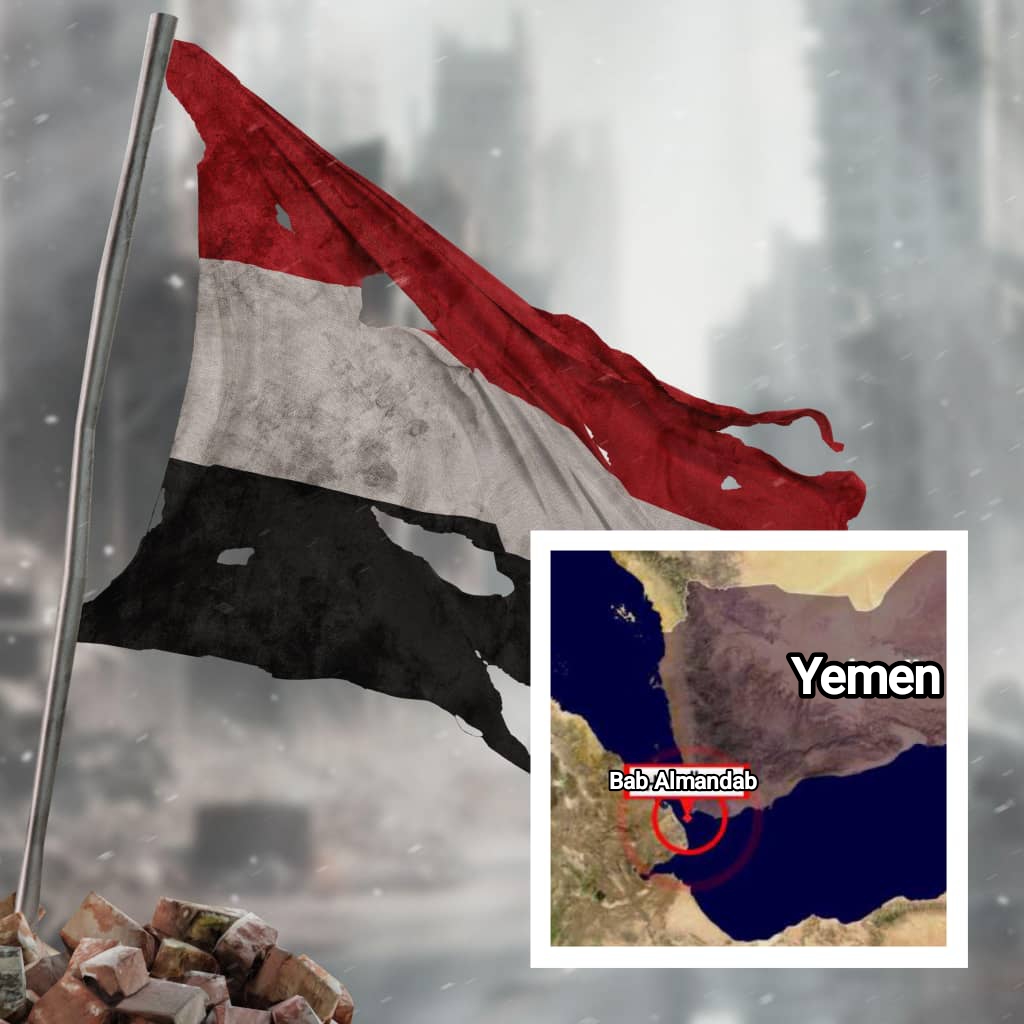
The Houthis continued their military attacks using ballistic missiles and drones off the Yemeni coast in the Red Sea and Bab al-Mandab, posing a major threat in the eyes of developed nations. All ports and waterways on the coasts of the Red Sea, Bab al-Mandab, and the Gulf of Aden were affected by the decline and disruption of shipping and unloading operations, starting with the ports of the Horn of Africa, passing through the ports and harbors of the Gulf and the Levant, and ending with the Egyptian Suez Canal. The targeting of ships in the Bab al-Mandab Strait and the Red Sea was represented in the following :
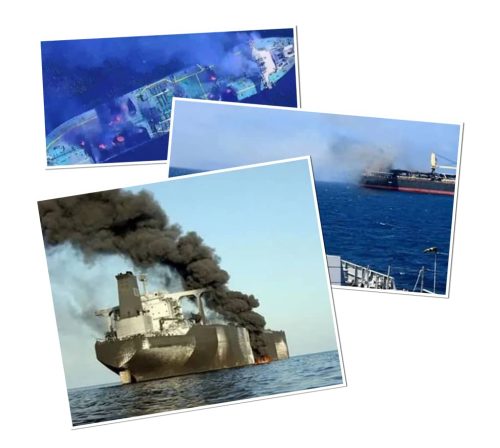
On November 19, 2023, the Houthis attacked several ships near Bab al-Mandab and seized the “ Galaxy Leader ” ship , claiming that it was owned by an Israeli businessman, while the ship and its crew remain detained in Yemen to this day .
And in On November 25 , 2023, a Yemeni drone struck a ship. The company “ Clandar ,” owned by the Israeli company “Zim,” and in December 2023, the Houthis used an armed drone and a naval missile to attack two Israeli ships.
One is called “ Gebrnein ” and the other “ Unity Explorer” to prevent them from passing through the Bab el-Mandeb Strait to supply oil needs to the United States .
In its latest escalation at that time, the Houthi group announced on December 9, 2023, the expansion of military operations by preventing the passage of all ships heading to Israel, regardless of their nationality, if food and medicine were not allowed into the Gaza Strip .
The Humanitarian Crisis Within Yemeni Society as Result of the War :
The international Houthi escalation had repercussions in exacerbating the economic crisis that has been occurring among Yemeni society since the beginning of the civil war in 2015, and living conditions became even more critical, especially when the Israeli entity and the United States deliberately bombed the port of Hodeidah several times with air raids, which made the port completely out of service, as it was the only maritime lifeline for Yemenis in the north .
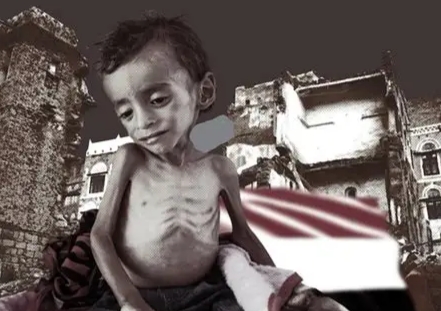
According to the United Nations, since its beginning, the war has left more than 18,671 dead and nearly 32,903 wounded, while the number of displaced persons and migrants due to the war has reached more than 4 million people .
United Nations reports on the crisis in Yemen indicate that the humanitarian situation in the country is worsening, with more than 18.2 million people falling into poverty and food insecurity, and 9.8 million children in need of humanitarian assistance .
The reports also point to the most prominent challenges, which are food insecurity , in addition to the fact that the ongoing violence has led to social fragmentation; as well as the continued attacks on civilians and infrastructure through armed conflict .
According to a report by the United Nations Development Programme (UNDP) , the economic collapse caused by the war and forms of conflict from the beginning until today has led to a decline in development for more than two decades, most notably the deterioration of the value of the local currency and the rise in inflation .
Expected Outcomes of the Yemeni Crisis :
There are several possible scenarios for how the Yemeni crisis will end. In light of the complex and intertwined strategic dimensions surrounding the Yemeni crisis, and with internal factors being influenced by external factors, the features of a solution or the continuation of the crisis will manifest themselves in various ways and forms .
There is a scenario that points to a political settlement between all Yemeni parties, despite the significant obstacles represented by the conflict of interests between the warring parties and the diversity of their external dependencies. While there are positive indicators of rapprochement, finding a comprehensive settlement requires international consensus .
There is a scenario that could lead to partition, which analysts see as the most likely in the medium term, in the event of continued failure to find a comprehensive political settlement. This would involve dividing Yemen into a northern region under the control of the Houthis, and a southern region under the legitimate government and the Southern Transitional Council. This could create new conflicts between the different factions in each region .
In addition to the scenario of continuing the armed conflict, which is the most realistic in the near term, the current reality indicates the continuation of the conflict without any party decisively winning. All the conflicting parties remain stuck in the spiral of armed conflict in light of the political crisis in finding peaceful solutions, and this exacerbates human suffering and the continuation of external interventions from time to time, officially and unofficially .
The possibility of international intervention remains, depending on the international community’s willingness to take action to resolve the crisis. However, it will face significant challenges, including the reluctance of major international powers and conflicting regional interests, which suggest that a large-scale intervention is unlikely. Furthermore, the demographics of the population are not conducive to international intervention, making it difficult to achieve .