



Analysis: (HAPC) Team
Date: 18/3/2026
Since the beginning of 2026, Ethiopia has been moving rapidly and clearly towards developing its digital infrastructure and the communications and internet sector. This is represented by concluding successive agreements with most global communications and technology companies, and by launching a number of seminars and events aimed at raising digital awareness and the need to use it in areas of daily life , striving diligently towards moving from the world of traditional means to the world of digital technology, with the aim of adapting this in many service and administrative sectors.
Key Points of Ethiopia’s Approach to Technological and Digital Development :
Ethiopia’s focus on digital and communications technology development is reflected in the successive agreements concluded by the Ethiopian Telecommunications Company with many global technology companies, in addition to the events and seminars held by Ethiopian government institutions aimed at embodying and adapting digital technology in various government operations. The most important of these key points are listed below :
- In January 2026, the Ethiopian Telecommunications Corporation held talks with the private telecommunications company SOMACABLE , based in Hargeisa , to explore ways to develop a strategic cross-border partnership, with the aim of expanding international telecommunications and digital services .
- Last February, the telecommunications company revealed the signing of the tripartite strategic agreement with Djibouti Telecommunications Company and the Sudanese “SUDATEL” group to build a cross-border fiber optic network, to link the Republic of Djibouti, Ethiopia and Sudan .
- Events and seminars related to the general elections in Addis Ababa, where the National Election Board announced in recent weeks its adoption of launching digital platforms and software applications, most notably the “Hershai” application, to facilitate procedures related to registering candidates for the parliament and regional councils, and to facilitate the election process for citizens in various parts of the country next June .
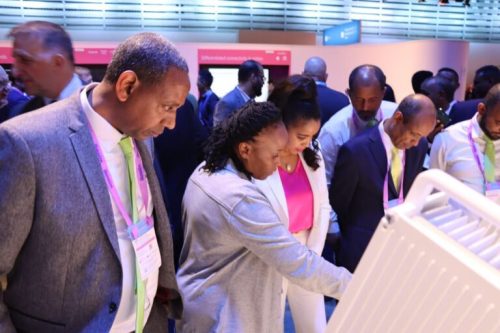
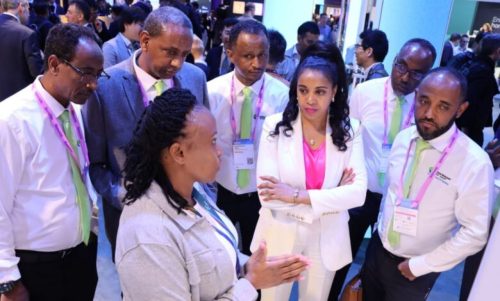
- the CEO of the Ethiopian Telecommunications Company, Freehewt Tamro , along with her accompanying delegation, participated in the Mobile World Congress 2026, held in Barcelona, Spain. Immediately after the conclusion of this conference, Freehewt Tamro concluded several agreements with executives of international technology companies that supply network equipment, which we will mention separately below.
- reached an agreement with ZTE for a network expansion and upgrade project for 647 communication sites, including 115 sites distributed across rural areas, in order to enhance communication service and expand the scope for easy access to digital services throughout the country, in addition to providing the fourth generation network to up to 95.5% of the population using it.

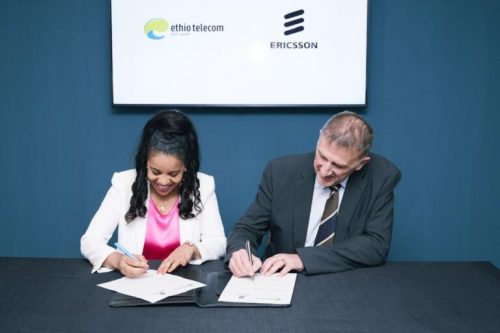
- also signed an agreement with Ericsson to expand and upgrade the telecommunications infrastructure. The project aims to deploy new technologies in 1,500 locations to provide a mobile network, with services provided in 75 rural sectors, in addition to upgrading 502 locations to 4G technologies.
- Following negotiations, the Ethiopian Telecommunications Company reported that it had made significant progress towards reaching an agreement with Huawei, explaining that the anticipated agreement aims to develop and introduce fourth and fifth generation networks using artificial intelligence technologies .
- revealed the implementation of an initial technology trial to adopt technological solutions in partnership with Nokia, noting preparations to establish a new innovation center within its Academy of Excellence, in addition to establishing ten digital education centers in some schools .
Conclusion :
These points stand out as strategic Ethiopian milestones aimed at developing the digital infrastructure and supporting digital transformation, through investment in expanding high-speed internet and communication services, and providing digital services directed to communities, institutions and companies throughout the country. This investment ultimately serves Ethiopia in multiple ways, most notably developing Ethiopian society and connecting it to the developed world to keep pace with it, thus creating a national workforce capable of increasing local and national production alike; the other is the financial tax return for state institutions through expanding the scope of local users of communications and digital technology; in addition, adapting the use of digital technology and communications in administrative and institutional work in any country is a way to save effort and time and provide accuracy in work, which in turn also leads to increased productivity .