


Editing by HAPC.Africa
Key Points from Hemedti’s Statements: The Rapid Support Forces’ vision for the course of the Sudanese war and the future of peace initiatives.
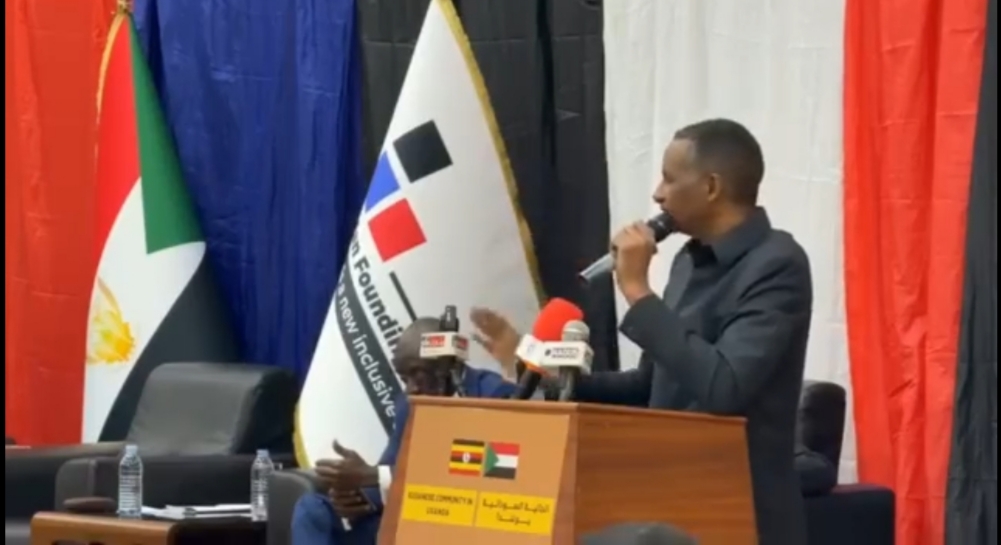
Mohamed Hamdan Dagalo ( Hemedti ), commander of the Rapid Support Forces (RSF), addressed the developments in Sudan since the December Revolution, from the reasons that led to the outbreak of the current armed conflict to the ongoing battles with the Sudanese army under the leadership of Abdel Fattah al-Burhan. The speech conveyed multiple political and military messages, outlining the RSF’s perspective on the roots of the crisis and its potential outcomes .
An Overview of Ongoing Conflict in Sudan:
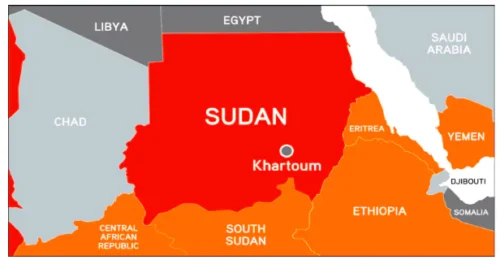
Armed clashes erupted in Khartoum and other parts of Sudan in mid-April 2023 between the Sudanese Armed Forces and the Rapid Support Forces (RSF).
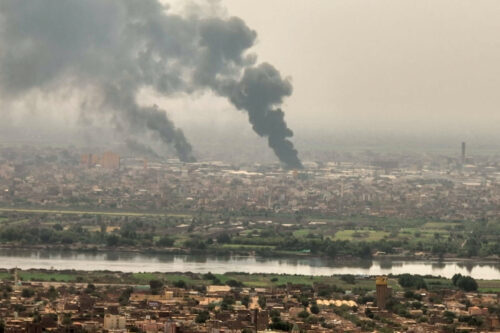
This conflict stemmed from disagreements over plans to integrate the RSF into the regular army as part of the political transition to civilian rule. The fighting has led to a widespread humanitarian crisis, displacing millions both internally and externally, and has stalled numerous regional and international ceasefire initiatives .
The Roots of Crisis and Responsibility for Escalation
Hemedti explained that the outbreak and continuation of the fighting to this day is the responsibility of the army’s leadership, both politically and militarily. He launched scathing criticism against the former regime led by Omar al-Bashir, describing it as “the head of corruption.” He also defended his personal position, denying accusations of gold smuggling and asserting that he had been a supporter of the country’s transition process since 2017 .
In response to his forces being labeled as coup plotters, the Rapid Support Forces commander asserted that the disinformation campaign waged by leaders of the Islamist movement within the army aimed to obscure the truth. He pointed out that they were the ones who had betrayed the principles of the December Revolution, while his forces were fighting to restore the revolution’s course. He cited as evidence the joining of members of the Sovereign Council and thousands of Sudanese citizens to the ranks of the Rapid Support Forces .
Field Developments and External Interventions:
The speech addressed the field and tactical aspects of the war, with Hemedti indicating coordination between the army and external parties. He expressed reservations about the army’s use of elements from the Somali “Al-Shabaab” movement and Tigrayan forces , noting the presence of foreign forces in the Al-Rusayris area and on the border with Egypt to provide military support to Burhan.
Regarding the use of weapons, Hemedti expressed concern about the use of drones launching chemical weapons, citing the Abu Zabad incident which resulted in civilian injuries including skin rashes and eye problems. He confirmed that his forces had shot down 12 drones bearing clear markings indicating the type of weapons and their manufacturers. He also suggested that these drones were launched from foreign airfields, asserting that without this air support, his forces would have been able to seize Port Sudan .
In a related context, he explained that what was known as the “Kwik convoy” was carrying shipments of weapons and ammunition. He affirmed his forces’ commitment to continuing military operations until their objectives are achieved, including seizing strategic locations whenever necessary .
Peace Initiatives and Regional Support:
Hemedti criticized what he described as the duplicity of the army’s military and political leadership, indicating that they have been obstructing peace and reconciliation initiatives since the beginning of the crisis, while claiming otherwise. He also expressed his displeasure with attempts to smear his forces in the media by using terms like ” Janjaweed ,” emphasizing that his forces are a regular military force .
In his speech, he also emphasized the importance of regional support, urging that the efforts of Saudi Arabia and the United Arab Emirates in supporting Sudan since the December revolution not be overlooked. He noted their support for the Juba Peace Agreement and infrastructure plans, including the project to construct 13 roads in Darfur, the implementation of which has been hampered by internal factors .
A Letter of Apology to Sudanese People:
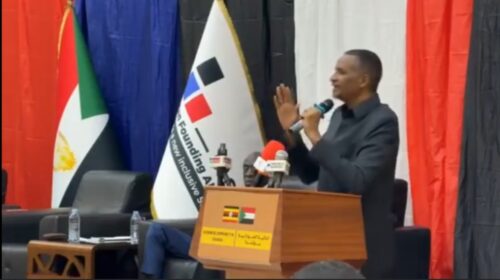
The commander of the Rapid Support Forces concluded his speech with a sincere apology to the Sudanese people, expressing his regret for the suffering caused by this “accursed war.” He emphasized that his forces were forced into this battle after being betrayed, and pointed to the heavy price the Sudanese citizen is paying as a result of this conflict .