


Policy Analysis: “Self-Reliance” in Eritrea – The Ideology of Centralized Control and Livelihood Erosion
| Element | Content |
| Date: | October 24, 2025 |
| Title: | Policy Analysis: “Self-Reliance” in Eritrea – The Ideology of Centralized Control and Livelihood Erosion |
| In This In-depth Analysis: | |
| The Contradictory Narrative: | A critical analysis of how the “Self-Reliance” rhetoric from the UN panel serves as a cover for policies of absolute state control and monopoly. |
| Economic Centralization and Monopoly: | Unveiling state mechanisms for monopolizing the fishing sector and forcing fishermen to sell at meager prices to government-linked dollar-earning entities. |
| Demographic and Agricultural Erosion: | Assessing the devastating impact of Indefinite National Service on the agricultural sector, youth migration, and elite land appropriation. |
| The Food Security Paradox: | Reviewing the food security crisis in non-agricultural regions (e.g., Dankalia/Afar) resulting from production decay and border isolation. |
| The Reality of “Progress”: | A stark comparison between claims of “commendable progress” and international data (HDI, UNHCR, RSF) ranking Eritrea at the global bottom. |
| International Complicity (The Diplomatic Gap): | Analyzing the disconnect between the diplomatic language of UN coordinators in Asmara and the non-cooperative stance revealed in the UN Special Rapporteur reports. |
| Read the full analysis to uncover the ideological and political dimensions shaping Eritrea’s future and explaining its mass refugee flows. |
Executive Summary
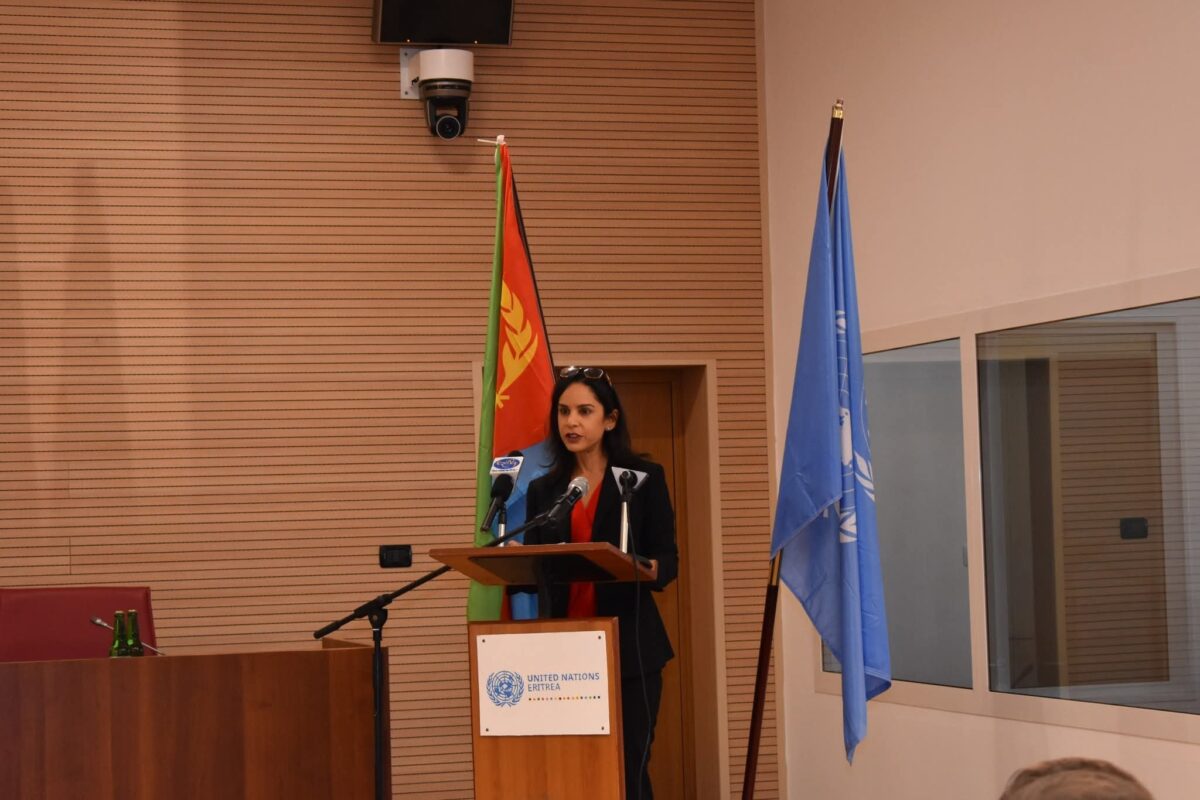
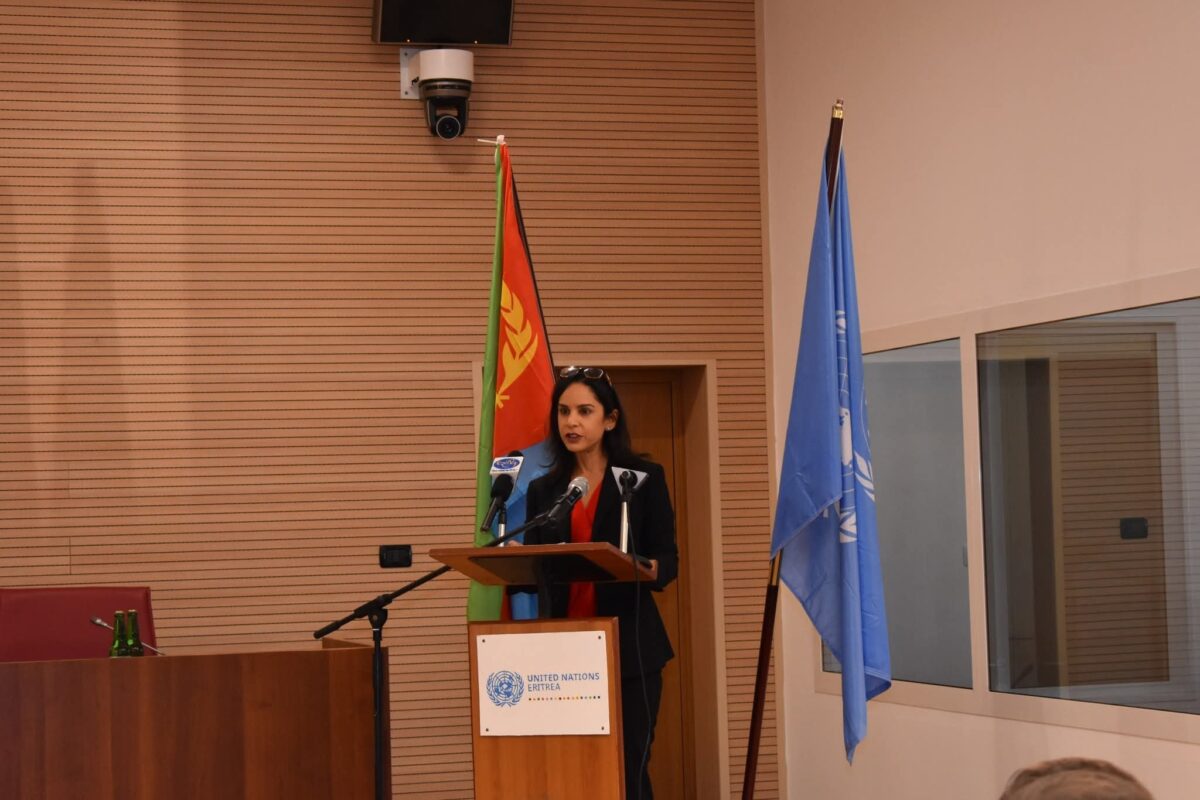
In October 2025, Asmara hosted a high-level panel, in collaboration with the United Nations, where the principle of “Self-Reliance” was marketed as a “compelling model” for empowerment and partnership. However, an in-depth analysis of this policy’s practical implementation reveals it to be an ideological tool for absolute centralized control over human capital and all economic resources, rather than a strategy for sustainable development. This policy choice has led to the continuous erosion of livelihoods nationwide, driving one of the highest refugee outflows globally. The analysis highlights the striking contradiction between the diplomatic praise offered by UN coordinators in Asmara and the damning data from the UN’s own bodies (UNHCR, Special Rapporteur), which document forced labour, restricted freedoms, and chronic underdevelopment. The policy is not one of “development” but one of “containment”, sacrificing local welfare for the stability of a highly centralized, non-accountable political system.
1. The Contradictory Narrative: “Empowerment” Versus State Monopoly
The “Self-Reliance” principle, celebrated in the Asmara panel, collapses when scrutinizing its economic application in vital sectors. The government’s claim to be building a model of “sustainable and equitable cooperation” is sharply contradicted by the reality of the coastal economy.
- The Fishery Trap: Despite possessing a coastline rich in Red Sea resources—a primary source of livelihood for over $80%$ of the Southern Red Sea region inhabitants—the State maintains a rigorous monopoly. Local, artisanal fishermen face severe restrictions on navigation and permits.
- Forced Pricing: Fishermen are effectively forced to sell their catches at meager, state-determined prices to government-linked enterprises. These firms then exclusively export the high-value seafood, generating crucial hard currency (USD) that is fully centralized, with minimal benefit trickling down to the local, often Afar, communities. This mechanism of wealth extraction has led to the bankruptcy of local fishing companies and the destruction of traditional livelihoods, demonstrating control rather than “empowerment.”
2. Demographic and Agricultural Erosion: The Cost of Indefinite Service
The most devastating consequence of the “Self-Reliance” policy is its direct impact on human capital and the agricultural sector—a cost entirely omitted from claims of “commendable progress”:
- The Indefinite Service Drain: The core mechanism of resource control is the Indefinite National Service. This prolonged, low-paid conscription, described as “forced labour” by the UN Special Rapporteur on Human Rights in Eritrea [Link to 2025 Special Rapporteur Report], systematically strips the fertile highland and northern lowland agricultural regions of their most productive demographic group: the youth. This has led to critical labour shortages in farming villages, severely compromising food production capacity.
- Refugee Data as a Barometer: The resultant mass exodus is starkly documented. UNHCR data confirms the total number of Eritrean refugees and asylum seekers worldwide stood at approximately $663,085$ individuals by the end of 2024 [Link to UNHCR Data]. Furthermore, the UN Special Rapporteur’s report (2025) notes that the Eritrean government rejected all 21 recommendations presented during its Universal Periodic Review regarding this service.
- Elite Land Seizures: Exacerbating the labour shortage are persistent reports of appropriation of fertile farmlands by powerful military officials and regime insiders. This undermines smallholders’ property rights and eliminates the incentive for production, further contributing to rural displacement.
3. The Food Security Paradox: Isolation and the Silence of Dankalia
The policy of “Self-Reliance” manifests externally as a near-total closure of land borders with neighbours (Ethiopia and Djibouti), framed as a sovereign security necessity. This deliberate isolation severs vital regional trade routes that historically acted as an essential food security buffer.
- A Double Isolation Crisis: With both domestic production (fishing and farming) destroyed and regional imports blocked, the humanitarian situation has deteriorated sharply. The Dankalia region (Northern and Southern Red Sea), home to a majority of the Afar ethnic group, is the most tragic example. These pastoral and coastal communities are blocked from their sea livelihoods due to monopoly and cut off from traditional land trade, resulting in acute food shortages and localized famine conditions—a silent crisis exacerbated by the dual policies of internal control and external isolation.
4. International Complicity: The Diplomatic Gap
The most critical issue arising from the Asmara panel is the cognitive dissonance between the pragmatic diplomatic language of engagement and the factual reality documented by the international oversight bodies:
- Praise Versus Data: While the UN Coordinator offered praise for the “equitable model,” the UN Development Programme (UNDP) [Link to HDI Report] Human Development Index (HDI) for 2023 (latest data) rated Eritrea at $0.503$, placing it in the low human development category—far below the global average ($0.744$).
- Freedom and Credibility: A nation claiming “commendable progress” must show basic freedoms. Yet, Reporters Sans Frontières (RSF) [Link to RSF 2024 Report] ranked Eritrea 180 out of 180 countries in its 2024 Press Freedom Index, and Freedom House [Link to Freedom House 2024 Report] awarded it a score of 3/100 in its 2024 Global Freedom report. This gap suggests that diplomatic engagement, while perhaps intended to ensure minimal humanitarian access, ultimately risks providing political cover for a system that actively obstructs national development.
Conclusion
Eritrea’s “Self-Reliance” policy is revealed not as a philosophy of economic empowerment but as a highly effective political architecture for centralized control. It thrives not by generating wealth for its people, but by efficiently extracting existing resources and labor while maintaining a complete absence of accountability or political pluralism.
The key takeaway is the absolute disconnect between the State’s narrative and the measurable data: the “progress” remains confined to the rhetoric within the conference hall, while the reality of 663,085 refugees and widespread economic dismantling continues to define life for the majority of Eritreans. Until the indefinite conscription is ended, and economic sectors are genuinely decentralized, the policy of “Self-Reliance” will remain synonymous with national impoverishment and mass migration.
| No. | Organization / Body | Report Title / Source | Source Link (Placeholder) |
| 1. | UN Human Rights Council | Report of the Special Rapporteur on the situation of human rights in Eritrea (2025) | [https://www.ohchr.org/en/documents/country-reports/eritrea-special-rapporteur-report-2025] |
| 2. | UN High Commissioner for Refugees (UNHCR) | Eritrea: Refugee and Asylum Seeker Statistics Global Overview (2024-2025 Update) | [https://data.unhcr.org/en/country/eritrea] |
| 3. | UN Development Programme (UNDP) | Human Development Index (HDI) for Eritrea (2023 Data) | [https://hdr.undp.org/data-center/country-profiles/ERI] |
| 4. | Reporters Sans Frontières (RSF) | World Press Freedom Index – Eritrea Ranking (2024) | [https://rsf.org/en/country/eritrea] |
| 5. | Freedom House | Freedom in the World Report – Eritrea (2024) | [https://freedomhouse.org/country/eritrea/freedom-world/2024] |
| 6. | U.S. Department of State | Country Reports on Human Rights Practices for Eritrea (2024) | [https://www.state.gov/reports/2024-country-reports-on-human-rights-practices/eritrea] |
| 7. | Field and Expert Reports | Independent studies on state economic monopolies in the Red Sea coastal fishing and trade sectors. | [Relevant Academic/NGO Publication] |