


Nairobi — Forum of Horn Vision "HAPC"
Date: May24,2026
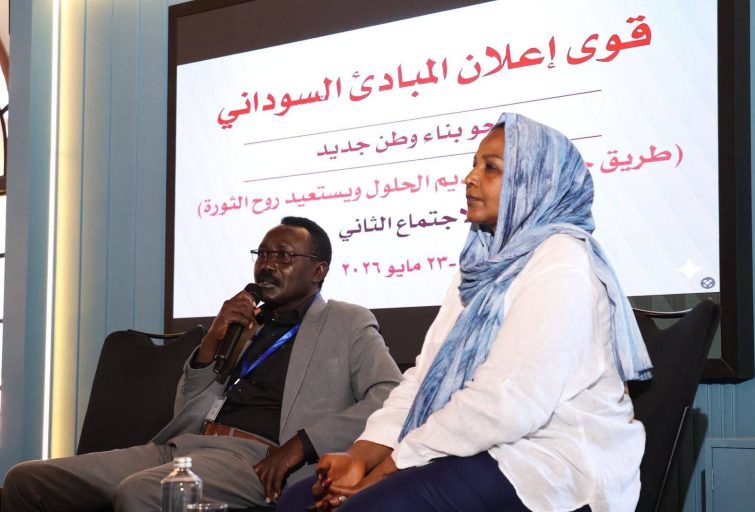
The Kenyan capital is witnessing intensive discussions between Sudanese political and civil forces regarding a new proposal aimed at establishing a temporary ceasefire and putting in place security arrangements for the transitional phase, as part of efforts to end the war that has now entered its third year.
Proposed Ceasefire Monitoring Mechanisms:
The initial proposal put forward by the Vice President of the Sudan Liberation Army Movement , Abdullah Harran , included the declaration of a preliminary truce extending for three months, which is renewable.
So, to ensure the parties’ commitment and reduce the level of violence, the vision stipulated that the truce be subject to local, regional and international monitoring in order to create a suitable climate for negotiations.
This negotiating framework aims to involve the main parties to the conflict to establish a ceasefire on the ground. And these parties are the Sudanese Armed Forces, the Rapid Support Forces, and the Sudan Liberation Army Movement ( led by Abdul Wahid Mohamed Nour ).
Therefore, in order to manage this phase of the demolition, the proposal document called for the establishment of two main mechanisms:
– Joint Military Committee: Concerned with monitoring the ceasefire, investigating violations, and preparing the necessary reports.
– Political Commission: It oversees the negotiation process and resolves disputes between the parties.
The Civilian Role and the Restructuring of the Army:
The document stressed the need for an active role for civilians in supporting peace efforts, through supporting community reconciliations, participating in monitoring violations, and spreading human rights principles.
A post-War Vision:
The proposal addressed the future of the security system by calling for the establishment of a unified military institution under civilian leadership. This vision includes restructuring the security services, implementing disarmament, demobilization and reintegration programs , as well as forming joint units and a unified defense council to ensure unity of military decision-making.
In the same context, the proposal made achieving sustainable peace contingent upon dismantling all armed formations with an ideological character, as a prelude to establishing a professional and national army.
Towards a Civil State:
At the conclusion of their deliberations, the participants agreed that this proposal constitutes a transitional bridge that moves the country from the square of fighting to the stage of new political arrangements, leading to the building of a civil democratic state based on the values of citizenship and the rule of law.
Observers believe that some of what was included in the proposal is premature and lacks realistic implementation given its initial presentation and lack of prioritization. However, it represents a positive starting point for rapprochement and peace in Sudan.
Share via: