



Addis Ababa — Forum of the Horn Vision "HAPC"
Date: May 18, 2026
In a strategic move that reinforces its historical position as the birthplace of coffee, the Ethiopian government has signed a landmark agreement with the African Inter-Coffee Organization . This step aims to support continental cooperation and modernize the coffee sector, aligning with the economic aspirations of the African Union’s Agenda 2063.
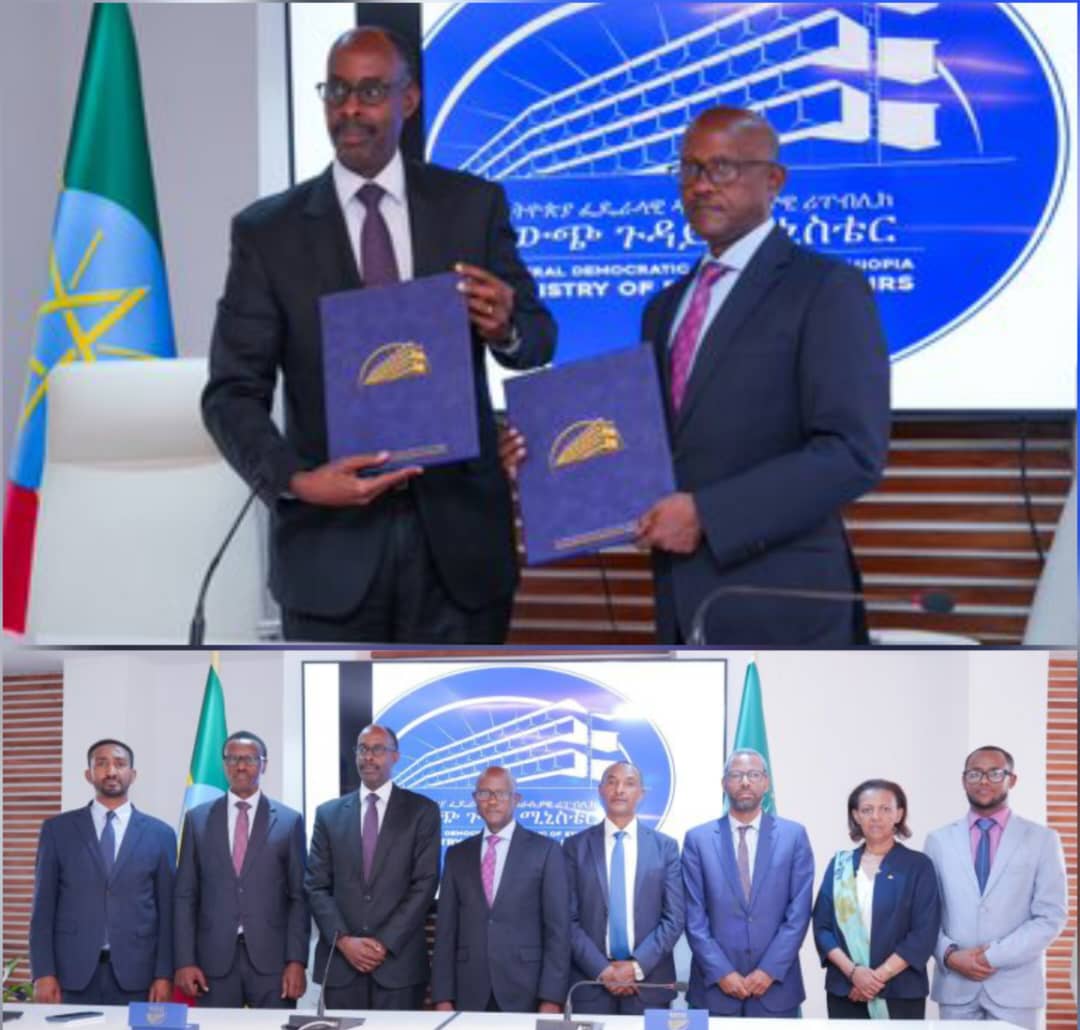
The agreement was signed in the capital Addis Ababa by Ambassador Hadira Abera, State Minister for Foreign Affairs, and Ambassador Suleiman Rutega , Secretary General of the African Coffee Organization.
Key Aspects of the Agreement and Its Strategic Gains:
The agreement is not limited to joint coordination, but also establishes significant practical steps in the African continent, including :
Establishment of the first country office: The agreement stipulates the establishment of the first country office of the African Coffee Organization within Ethiopia .
Hosting the G – 25 Summit: Addis Ababa has officially been granted the right to host the fourth African Coffee Summit ( G -25) , scheduled to be held in 2027.
Continental recognition: This partnership is gaining additional momentum following the African Union’s recent decision to classify the organization ( which was founded 66 years ago ) as a specialized agency of the Union, recognizing coffee as a strategic commodity for economic transformation.
Challenges of the Present Reality and Aspirations for the Future:
Despite Africa’s symbolic and historical importance in this sector, official statistics reveal a significant production gap; Ambassador Hadira summarized the most prominent features of the current situation and future prospects in the following table:
1- The current reality is that Africa contributes only 12% of global coffee production; therefore, Ethiopia aims to reach the list of major global coffee exporters by 2033.
2- Among the most prominent African challenges are weak productivity rates and imbalances in value chains; there is an ambition to raise productivity, support manufacturing, and enhance added value.
3- Another African challenge is the increasing pressures resulting from climate change, but there is an ambition to build a resilient sector capable of adapting and competing in international markets.
Economic and Social Dimensions:
Ambassador Suleiman Rutega described the event as a ” historic achievement ” that reconnects the organization with the historical roots of the beverage . He emphasized that strengthening the organization’s capabilities will directly contribute to improving the livelihoods of millions of African families whose farms depend on coffee as a primary source of income.
G-25 summit in 2027 is expected to see a large turnout of the continent’s largest producing countries, where it will highlight the formulation of sustainable and innovative solutions to ensure African coffee’s global leadership.

Share via: