


Editing by: HAPC Monitoring Unit,
Publication date: march 29, 2026,
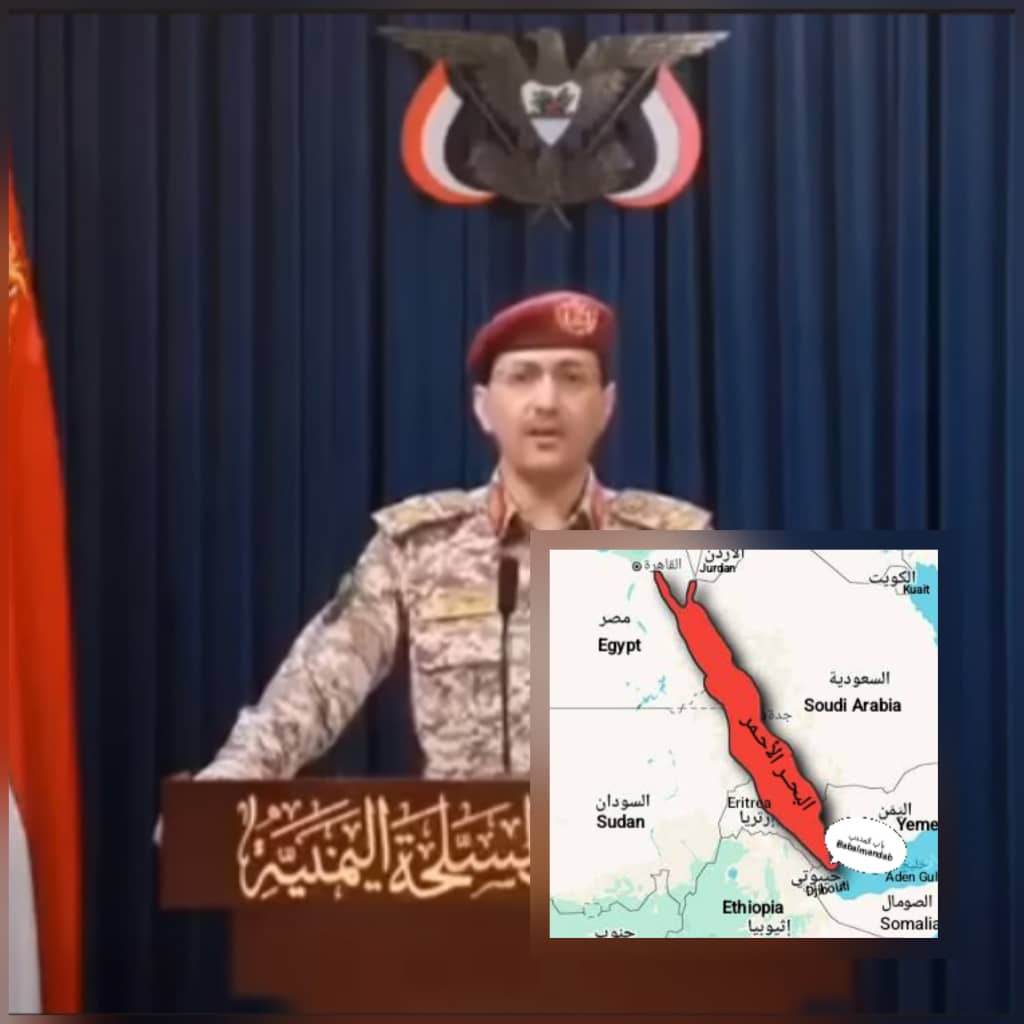
Brigadier General, Yahya Saree, the military spokesman for the armed forces of the Yemeni Houthi group, appeared yesterday, Saturday, announcing through a military statement the first military operation and the beginning of what he called the “support battle” for the resistance fronts and Iran, confirming the launch of ballistic missiles towards military targets of the Israeli entity in southern Palestine .
During the statement, Yahya Saree said that the military operations of the Ansar Allah Houthi group will not stop except by stopping the aggression against Iran, Lebanon, Iraq and all fronts of what he described as the axis of resistance .
Saree added, “…Therefore, if the US becomes involved in an attack and aggression against Iran with the Israeli enemy, the Yemeni armed forces will target its ships and vessels in the Red Sea …”
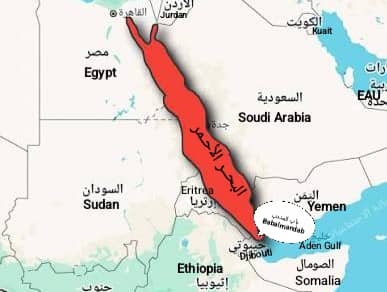
Red Sea area and Bab el-Mandeb threatened by Houthi group
This comes after days when an exchange of threats between the United States and Iran, including an Iranian warning to the United States, days earlier, about the possibility of targeting its main oil export center located on Kharg Island, threatening that if the island is targeted, it will put the Red Sea region and the Bab al-Mandab Strait in a state of insecurity .
There was anticipation for weeks regarding the Houthi group’s stance on the regional escalation since its beginning, in anticipation of the group entering the potential confrontation line .
Since the beginning of the war between Iran, the United States and Israel, the Houthis’ position has been limited to speeches by the group’s leader, Abdul-Malik al-Houthi, in which he condemned and rejected the aggression against the Islamic Republic of Iran. In his last speech, he stressed the need for escalation and military participation according to the requirements and developments on the ground, just before his military spokesman officially announced their involvement in the confrontation .
On a Hot Plate:
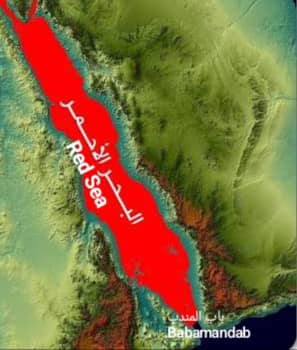
Bab el-Mandeb Strait and Red Sea on a hot plate
According to the analysis, the entry of Ansar Allah (the Houthis) into the current regional war by officially announcing missile and military operations directly threatens the security of international navigation in the Bab al-Mandab Strait and the regional and international waters along the Red Sea, and is an indication of the occurrence of a double crisis in energy supplies and global trade, and an increase in the economic pressures resulting from stopping navigation in the Strait of Hormuz to double, and therefore, the disruption of the Bab al-Mandab Strait and the navigation routes in the Red Sea leads to complicating military movements and increasing escalation in the maritime region.
Predictions from American and Israeli Media:
In a related context, Hebrew media assessments indicated that the Houthis’ entry into the confrontation has strategic dimensions, most notably threatening maritime traffic in the Red Sea and the Bab al-Mandab Strait, including the possibility of targeting the maritime sector using anti-ship missiles and drones .
Last Thursday, the United States issued a warning about the possibility of the Iranian-backed Houthi armed group entering the conflict and resuming attacks on ships in the Bab al-Mandab Strait, following threats by Tehran to expand the scope of the war and disrupt global shipping during the current conflict
.
Conclusion:
It is worth noting that the possibility of the Houthi group targeting maritime navigation was not mere speculation. They have been targeting commercial ships in Bab al-Mandab with missile strikes since late 2023, during the Israeli war on Gaza. The group created a state of maritime insecurity, causing commercial shipping companies to change their ship routes, avoiding passage through the Red Sea. Consequently, the Suez Canal in Egypt became almost completely paralyzed. The Houthi threat to ships ceased with the announcement by US President Donald Trump of a truce between Hamas and Israel.
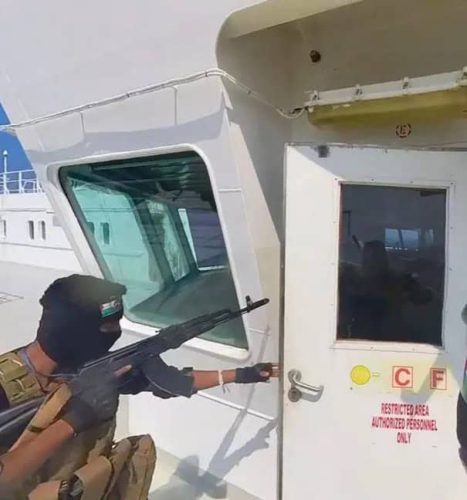
A picture of Houthis storming Galaxy ship’s command
According to observers, this escalation constitutes a sensitive factor for expanding the scope of the armed confrontation, given its connection to highly sensitive strategic passages and straits, given the closure of the Strait of Hormuz and then the disruption of the Bab al-Mandab Strait and the Red Sea passages, extending its impact to the Suez Canal, and placing the Middle East and the Horn of Africa region before the options of inevitable gradual escalation, to expand its scope in the future.