


Mogadishu|Forum of Horn Vision"HAPC"
Thursday|June4, 2026
The political crisis in Somalia has entered a critical phase following the outbreak of violent armed clashes in the heart of the capital, Mogadishu, amid strong international warnings that the country is sliding into a dark tunnel that threatens its future stability and unity.
US Warning: The Coming Hours are Crucial:
In an official statement released via the “X” platform, the US Embassy in Mogadishu expressed its deep concern over the escalating violence. Washington held Somali leaders from all sides fully responsible for maintaining civil peace and resolving conflicts through dialogue, emphasizing that “actions and decisions taken in the coming hours and days could have lasting consequences that directly affect Somalia’s security, unity, and future”.
Spark of the Crisis: Presidential Extension Ignites Street Protests:
These rapid developments on the ground come in conjunction with calls launched by the opposition to organize widespread protests, as the root of the crisis goes back to a state of sharp political division following the approval of constitutional amendments extending the term of President Hassan Sheikh Mohamud, after its supposed end date of May 15, 2026.
This move was met with outright rejection from opposition forces and some regional leaders, who described the extension as “illegitimate” and accused the authorities of undermining democracy and disrupting the fair electoral process.
The Situation is Volatile: Accusations are being Exchanged Between the Government and the Opposition:
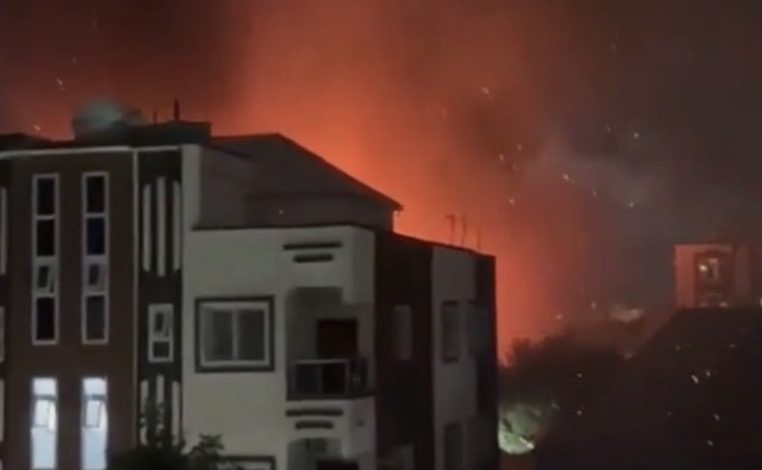
On the ground, the capital’s neighborhoods, including “Hol Wadaa,” experienced a tense night marked by explosions and heavy gunfire that terrified civilians, amid conflicting accounts between the two sides of the conflict: one being the opposition’s account, in which prominent leaders – including former Prime Minister Hassan Ali Khaire – accused government forces of directly targeting political headquarters, the homes of senior leaders, and opposition meetings.
The government narrative came with the Somali authorities denying these accusations in their entirety, indicating that armed groups loyal to the opposition were the ones who initiated attacks using heavy weapons targeting police stations and checkpoints, causing chaos in populated areas.
These field and political tensions come at a time when the opposition bloc is determined to begin its demonstrations to denounce the presidential extension decision, and to reject what they described as policies of forced displacement of the population, as well as their growing concerns about the mechanisms of governance in the country.
Share via: