


Addis Ababa|Forum of Horn Vision"HAPC"
Monday|June1 , 2026
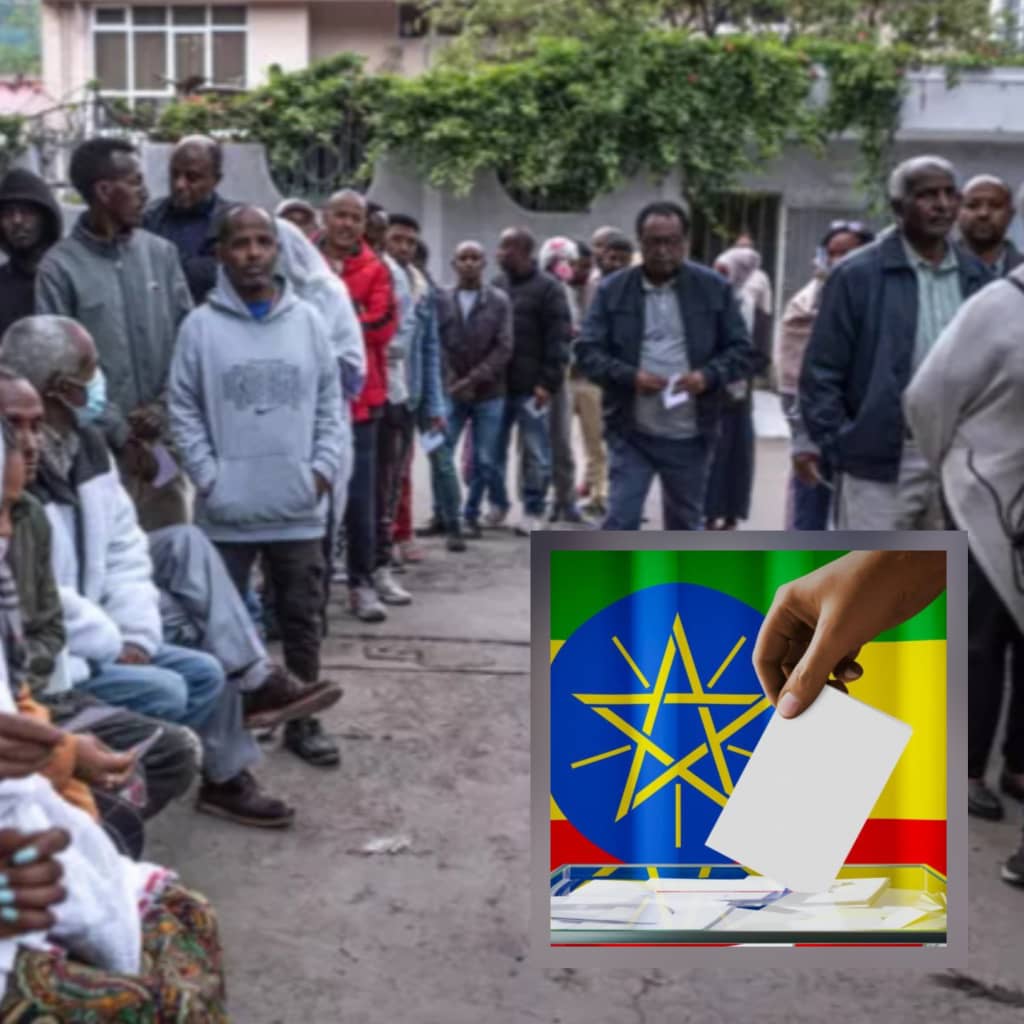
Ethiopia has launched its seventh general election in the country’s history, amid a tense political atmosphere and strong indications pointing towards a renewal of confidence in the ruling “ Prosperity ” party, headed by Prime Minister Abiy Ahmed.
Official reports speak of a large popular turnout and mobilization in front of polling stations, under strict international monitoring of the election process.
Analysts expect that the initial election indicators, along with Abiy Ahmed’s popular momentum, suggest a likely victory for the ruling party, which in turn would allow Abiy Ahmed a new five-year term.
The Promise of Self-Sufficiency and Acceptance of the Results:
After casting his vote, Ethiopian Prime Minister Abiy Ahmed quickly issued strong political messages, considering the long queues as evidence of the people’s ability to determine their own destiny without external dictates.
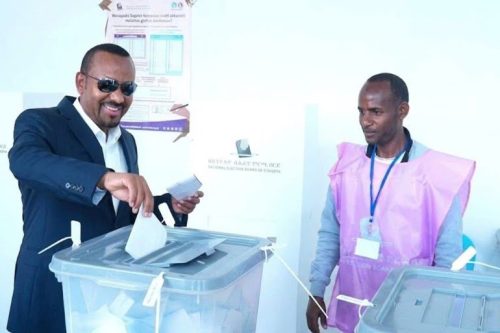
Abiy Ahmed exercising his right to vote in his hometown
Abiy Ahmed pledged to accept the results of the elections – expected to be announced on June 11 – with an open heart, promising to move the country over the next five years into a ” transformative era ” to change Ethiopia from dependency to self-sufficiency as a pillar of regional stability.
Milaturk Heilo , confirmed the electoral process is proceeding in a ” free, fair and democratic ” manner with millions of citizens flocking to the ballot boxes.
Election Map in Numbers:
The current elections are taking place amidst fierce competition to form the federal parliament and the councils of nine local regions, according to the following data:
– Eligible voters: More than 54 million citizens.
– The political map: 42 political parties.
– The competitors: More than 10,000 party candidates, in addition to 80 independent candidates.
– Infrastructur: Approximately 52,000 polling stations were allocated to facilitate the electoral process.
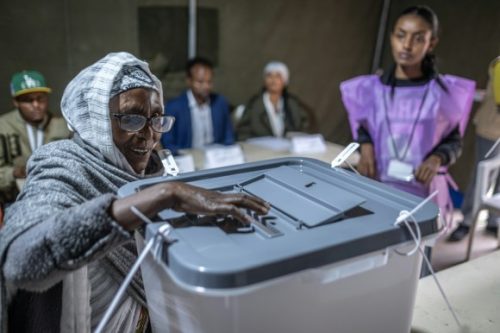
An elderly Ethiopian woman exercises her right to vote
Voters’ opinions ranged from enthusiasm to participation, as expressed by Benjamin Gedileme (Age 38 , from the telecommunications sector) said it was a “crucial moment”, while elderly citizen Saifee Desta(77 years old) saw his vote as a natural exercise of his individual right.
Regions Outside the Scope of the Elections:
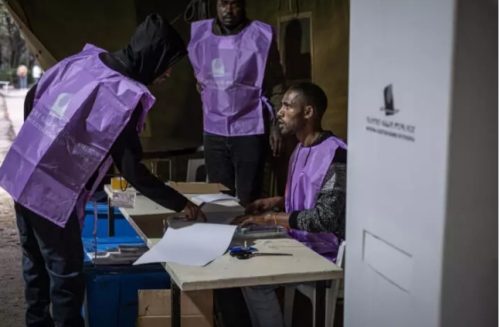
One of electoral committees preparing equipment before start of voting
Ethiopia’s comprehensive general elections face major logistical challenges due to security tensions, with the following groups excluded from the current elections:
Tigray region ( North ): The entire region was excluded from the electoral process due to the continued security tension there, and the inability of the electoral committees to spread out there easily, not to mention the impossibility of providing a democratic atmosphere for citizens to exercise their electoral right freely and comfortably.
– Amhara region: It witnessed threats from the Fano nationalist militias to disrupt the voting, which prompted the electoral commission to cancel voting in 8 out of 137 constituencies in the region, as well as the impossibility of free democratic practice in them.
– Some centers in the Oromia region: The Oromo Liberation Front announced its boycott and complete rejection of the current elections, due to ethnic and tribal disputes within the region.
Nevertheless , the IGAD mission, to side with international monitoring organizations and bodies, announced that the electoral process was proceeding in voting, effective, transparent and democratic manner , and the election results are scheduled to be announced on June 11.
Abiy Ahmed’s Aspirations for Greater Security and Development:
Analysts believe that Prime Minister Abiy Ahmed is heavily focused on the economy, combating poverty by attracting foreign investment and opening up the country, while also recognizing and working diligently to find a reconciliation approach to end the conflicts in Tigray and Amhara; since achieving tangible development will remain contingent on the government’s ability to put an end to security tensions and military attrition, and to place peace at the forefront of its political priorities.