


Editing by: "HAPC" Team,
Date: April 19, 2026
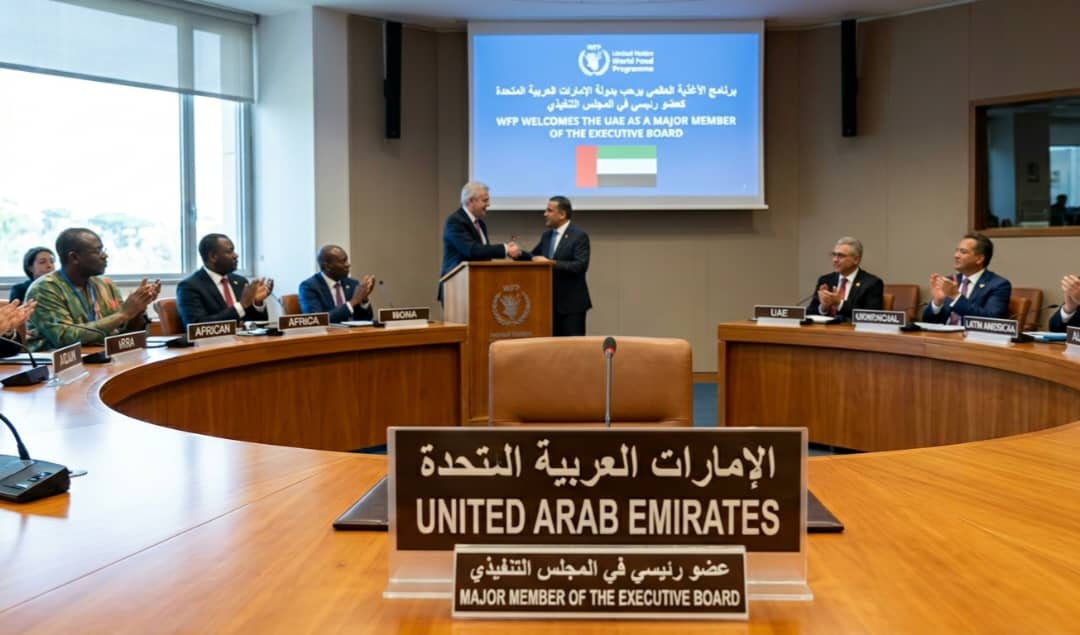
In a move reflecting its growing influence in the international humanitarian system, the United Arab Emirates has officially joined the Executive Board of the World Food Programme ( WFP ) for the years 2026–2028. This membership moves the UAE from the role of a major donor to that of an “effective strategic partner,” contributing to shaping global trends towards achieving a world free from hunger.
Humanitarian response in the face of acute geopolitical crises
The UAE’s election comes at an exceptional time, marked by escalating global food insecurity and complex logistical challenges resulting from tensions in waterways, namely:
- Global bottleneck : The Strait of Hormuz – through which one-fifth of the world’s oil supply and one-third of its fertilizer trade pass – faces ongoing threats that have led to a decline in tanker traffic of more than 90% since the end of February 2026.
- Humanitarian consequences : The United Nations has warned that continued obstruction of waterways could push an additional 45 million people into acute hunger.
- The UAE position : The country affirmed its commitment to confronting the “economic war” and illegal Iranian attacks targeting infrastructure and international navigation, considering the protection of the waterways a collective responsibility to ensure food reaches those in need.
Leading qualifications and a pivotal logistical role:
The United Nations’ assessment in selecting the UAE was based on a proven track record of capabilities and resources dedicated to serving humanity:
- The heart of humanitarian work: Dubai houses the most important UN humanitarian logistics hub next to Jebel Ali port, which allows aid to be redirected when sea routes are disrupted.
- Innovative alternatives : The United Nations Humanitarian Response Depot in Dubai is working to activate alternative corridors (by land and air) to ensure the flow of aid to Asia and Africa despite the obstacles.
- Pandemic legacy : The UAE has previously proven its efficiency by operating air bridges to deliver vital supplies to more than 100 countries during the COVID-19 pandemic.
A strategic vision for the future:
Ambassador Mohammed Abu Shehab , the UAE’s Permanent Representative to the United Nations, stated that the membership focuses on placing innovation and logistical efficiency at the heart of the international response; and the UAE is leading efforts to ensure the resilience of food systems and the stability of supply chains, regardless of geopolitical threats.
Ambassador Saad added: “Using maritime routes as a tool for economic blackmail is unacceptable behavior that threatens the stability of the global economy.”
Full international presence:
In addition to its seat on the World Food Programme, the United Arab Emirates continues to strengthen its presence in UN institutions, with recent diplomatic successes including:
- UN Women: The UAE elected for the second consecutive time to the Executive Board (2026–2028).
- NGO Committee : Winning membership for the period (2027–2030) alongside major international powers such as India, China and Saudi Arabia.
These international accolades collectively underscore the pivotal role played by the UAE in shaping the future of global humanitarian and development work.

Share via: